
DeepScan #7: Anand Rathi Wealth Ltd.
A pure-play HNI wealth-distribution business built around long-term client relationships.

Hello and welcome to the 7th edition of our DeepScan Series.
Before we get into it, I have something to share about Finology 30, our basket of 30 stocks for long-term investors.
We’ve put together a performance report on the returns delivered by its stocks over time.
If you’d like to read it, share your details using the form below, and we’ll send you the report.
Now, onto today’s DeepScan.
Note: This DeepScan is an educational analysis, not a stock recommendation. Its purpose is to help you learn how we analyse businesses. If you’re looking for actionable stock recommendations, explore Finology 30.
This is the third wealth management business that we’re covering, and there’s one misconception worth clearing up at this stage:
Not every business in this space follows the same business model.
Some companies only manage client relationships. Others also create financial products, lend against client assets or run capital markets businesses. Because of this, companies with similar client assets can have very different margins, earnings quality and risks.
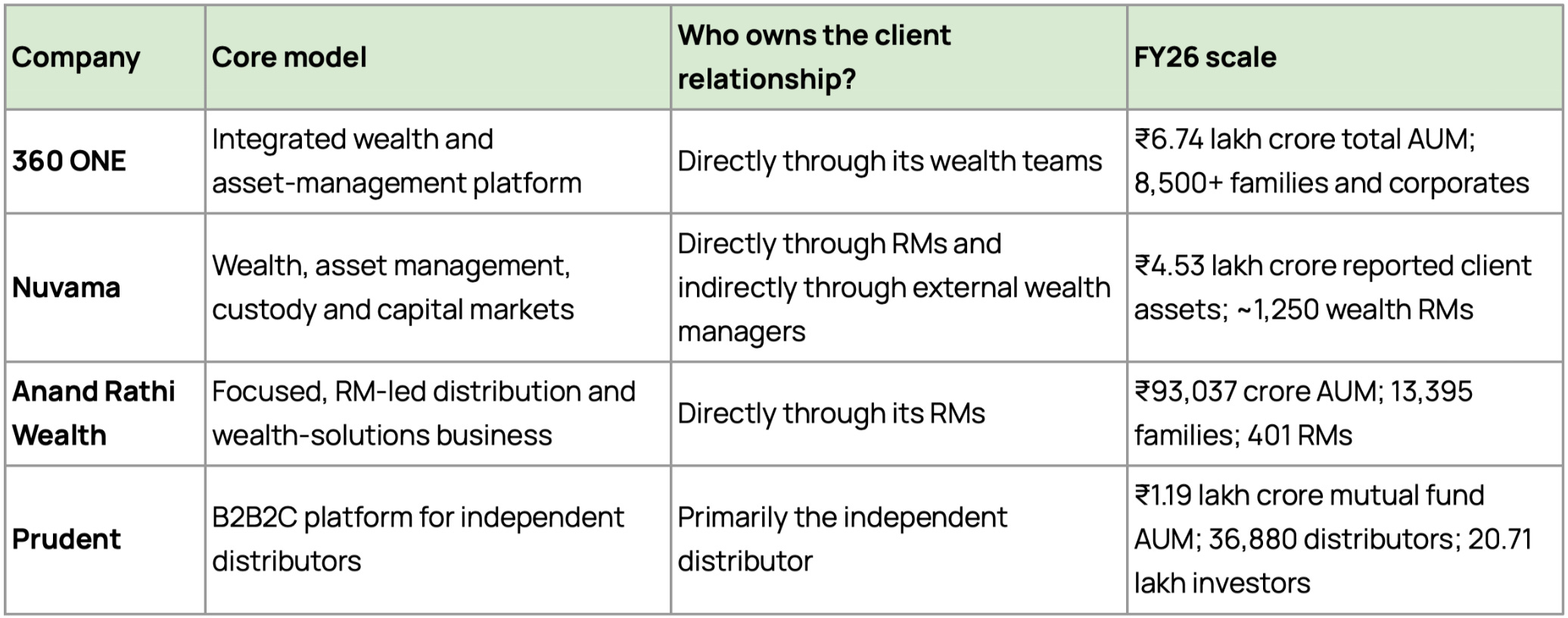
360 ONE advises clients, distributes products, manages its own funds, lends money and also operates in broking and investment banking.
Nuvama has an even wider model, with wealth management, asset management, lending, custody, clearing and capital markets.
But Anand Rathi is different
Like 360 ONE and Nuvama, Anand Rathi deals directly with clients through its own relationship managers. But instead of building most products itself, it mainly distributes products created by other financial institutions.
This also makes it different from Prudent. There, independent distributors own the client relationship, while the company provides technology and back-end support.
At Anand Rathi, its own RMs acquire clients, recommend products and manage the relationship end-to-end.
With that, let’s now zoom in on the company under our microscope.
A distribution-led business model
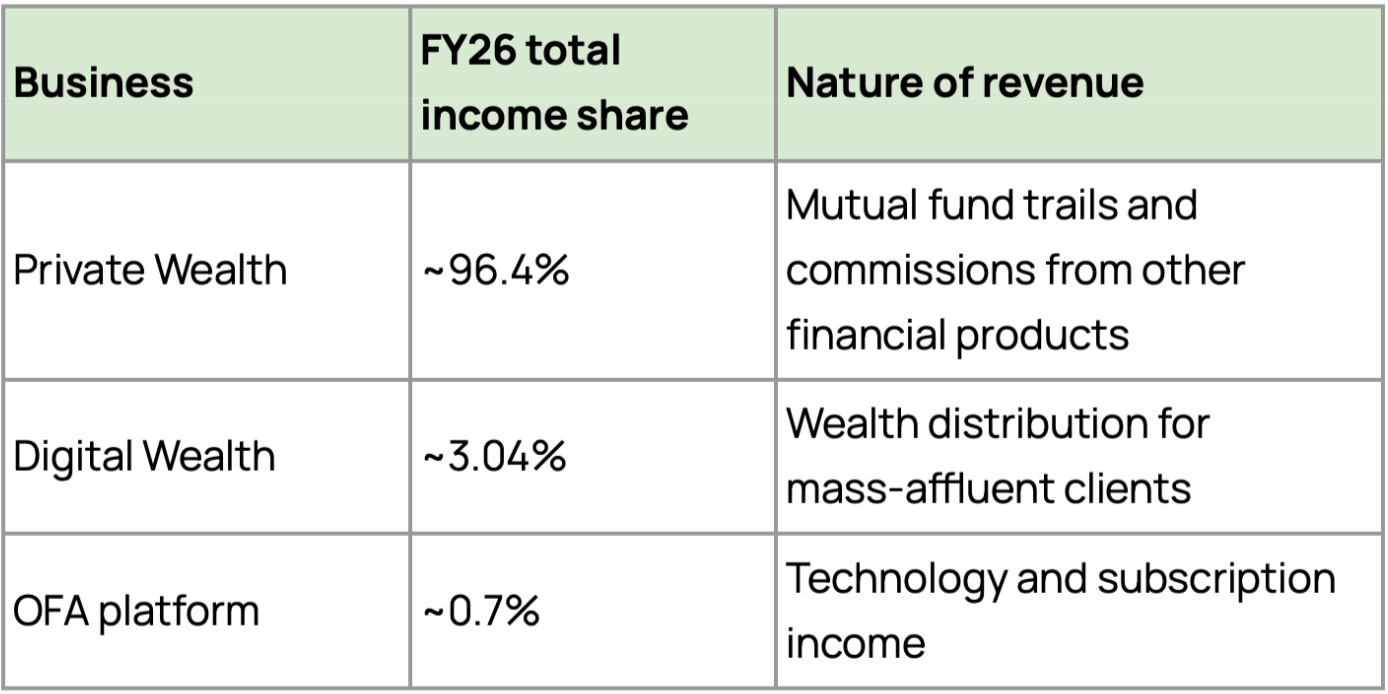
Anand Rathi earns commissions from mutual funds and other financial products in which its clients invest.
The company has deliberately remained a pure distribution-led platform instead of offering both advisory and distribution.
The management believes the two models create an inherent conflict of interest. A company cannot claim to provide unbiased advice while earning most of its income through commissions on the products it recommends.
Why? Because, according to management, advisory contributes just 3-10% of revenue for most wealth managers that offer both services. The remaining 90-97% still comes from distribution; this makes it difficult to clearly separate advice from product-selling incentives.
Alongside that, the company is also supported by two much smaller businesses: Digital Wealth and the Omni Financial Advisor, or OFA, technology platform.
1. Private Wealth
It singlehandedly drives almost all of the company’s revenue and profit.
Its role goes well beyond selling mutual funds or structured products. The company studies a family’s:
Financial goals and existing investments
Risk tolerance and liquidity requirements
Tax position
Succession and intergenerational wealth-planning needs
Based on this assessment, Anand Rathi recommends an asset-allocation strategy, helps the client implement it and monitors the portfolio for rebalancing over time.
The business is largely built around HNI and UHNI families, with investable surpluses typically exceeding ₹5 crore.
Management doesn’t insist that every client starts with a ₹5 crore investment. It looks for families that have the potential to invest that much over time, even if they begin with a much smaller amount. The thinking is simple: prove the value first, and a larger share of the family’s wealth is likely to follow.
The numbers suggest this approach is working. Active client families grew 13% YoY from 12,330 to 13,941 in Q1 FY27.
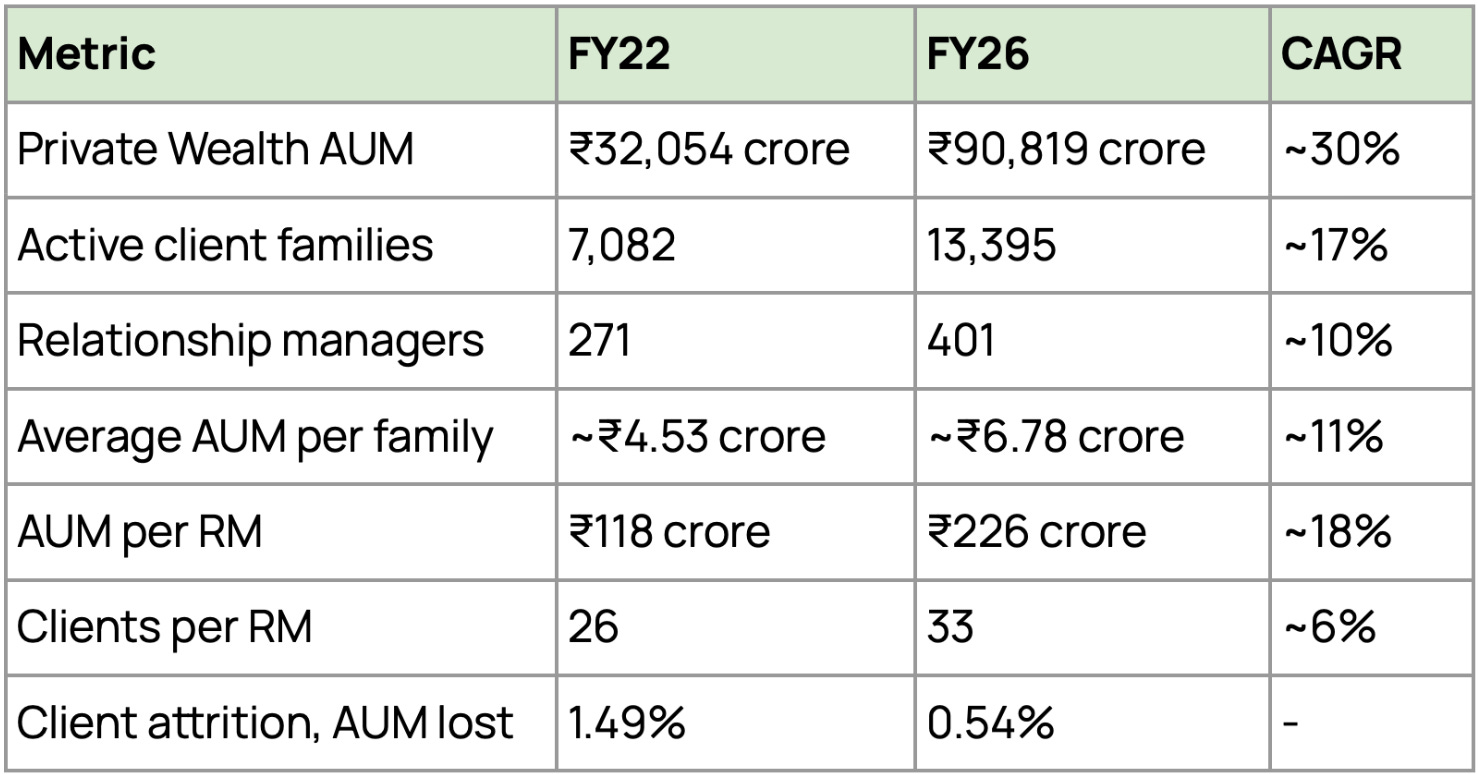
Average AUM per family increased from ~₹4.53 crore in FY22 to ~₹6.78 crore in FY26. It further reached ~₹7.44 crore in Q1 FY27.
The client mix has also moved steadily towards larger relationships.
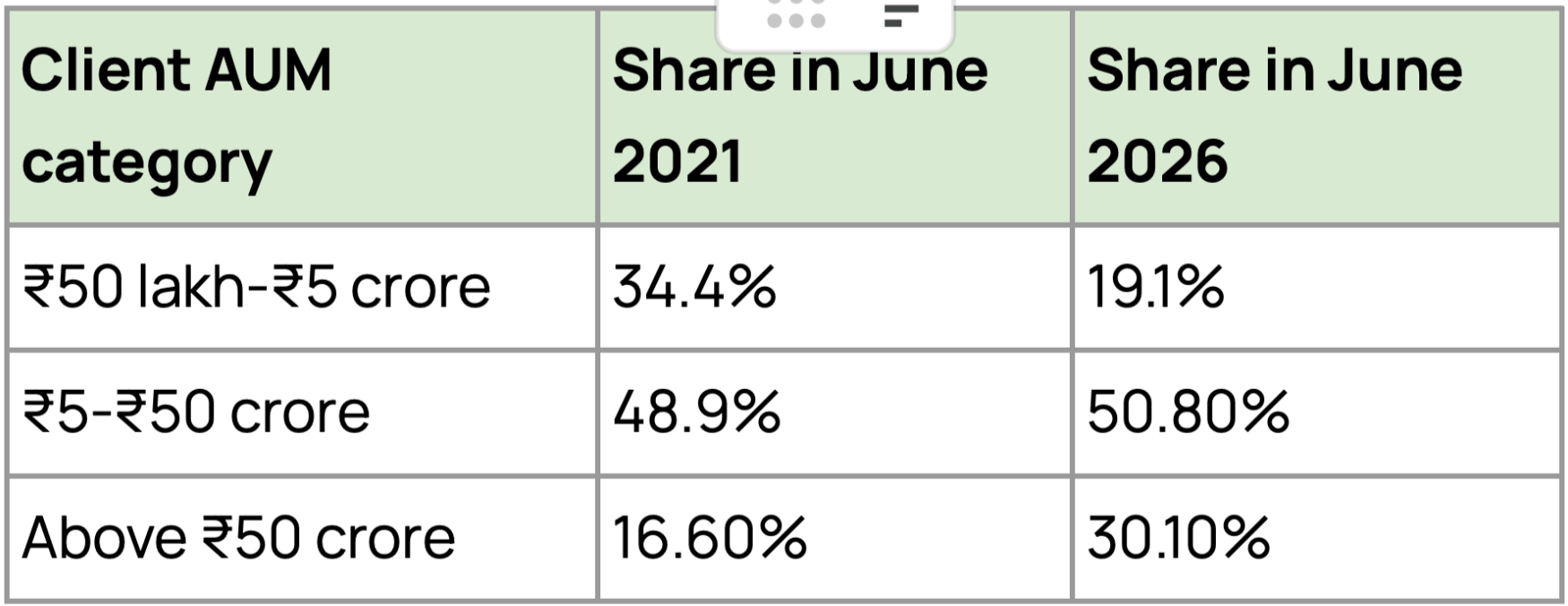
The share of AUM coming from families with more than ₹50 crore has increased by ~81% in five years.
This is not only because Anand Rathi acquired more UHNI clients. Many existing families gradually increased their investments and moved into higher wealth categories.
Now, as clients become wealthier, their expectations evolve too. They look for more sophisticated services, customised reporting and access to a broader range of investment products. Keeping up with these needs means Anand Rathi will have to strengthen its taxation, estate-planning and UHNI capabilities while preserving the standardised operating model that supports its strong margins.
To reduce the impact of equity-market volatility, Anand Rathi builds client portfolios using mutual funds as Plan A for long-term growth and structured products as Plan B for stability.
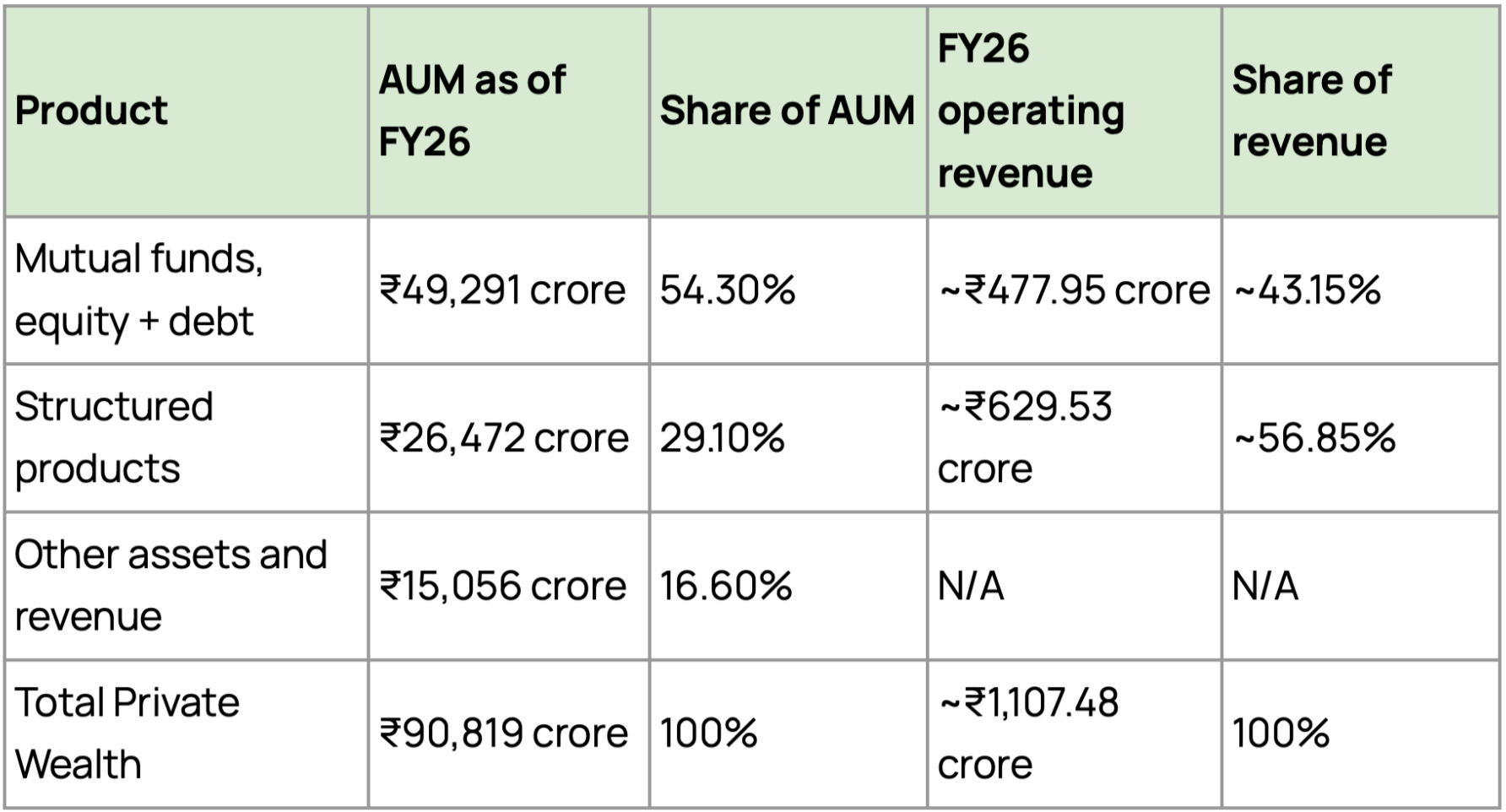
Plan A: Mutual Funds
Mutual funds are at the heart of Anand Rathi’s long-term wealth creation strategy.
At the consolidated level, equity mutual-fund net inflows were ₹7,969 crore in FY26. The company captured around 2.38% of industry net inflows, compared with only 0.18% in FY20.
In active mutual funds, its share has increased from 1.01% in 2019 to 1.46% in December 2025.
The improvement in net-inflow share is particularly noteworthy. AUM market share can rise because existing investments appreciate with the market. Net-inflow share, on the other hand, reflects how much fresh client money a company is attracting. Moving from 0.18% to around 2.3% suggests Anand Rathi has been capturing a much larger share of new industry inflows.
Approximate commission yield on its mutual-fund model portfolio is around 1.09% after GST.
The main reason for the company’s AUM market share gain is the strong performance of its portfolio. Its portfolio strategy delivered a CAGR of 15.54% between April 2014 and June 2026, compared with 10.89% for the Nifty 50. An investment of ₹10 crore would have grown to ₹58.75 crore under the strategy, versus ₹35.51 crore in the index.
The company targets annual returns of around 14-15% with a portfolio beta of roughly 0.6.
In simple terms, the portfolios are designed to be significantly less volatile than the Nifty. Despite taking lower risk, the portfolios have generated a Jensen’s alpha of 5-6.5%, meaning they’ve delivered returns above what would typically be expected for that level of risk.
The product-selection process is centralised.
Relationship managers are expected to focus on understanding clients and communicating the strategy, while scheme selection and portfolio construction are handled by specialist research and product teams. This reduces the risk that each RM creates a different portfolio or recommends whichever product is easiest to sell.
In our view, mutual funds have two practical advantages for Anand Rathi.
First, they provide diversification without requiring the company to build its own stock-selection or PMS infrastructure.
Second, the company earns trail commissions for as long as clients remain invested in regular mutual-fund plans. This creates recurring revenue linked to average AUM.
Moving on to the next plan…
Plan B: Structured Products
Anand Rathi’s structured products are mainly market-linked debentures issued by group company ARGFL, with a smaller amount coming from outside NBFCs. For example, in Q1 FY27, ₹1,875 crore of the ₹2,187 crore primary issuances, or around 86%, came from group companies. Their returns are linked mainly to the Nifty, but the maturity period, maximum return and loss conditions are decided in advance.
Suppose a client invests ₹1 crore in an MLD for five years. The product may promise a predefined return if the Nifty stays above a certain level at maturity. Even if the market remains flat, the client may still earn the agreed return. However, if the index falls below the specified limit, the return may be reduced, and the investor could also lose part of the principal. Repayment also depends on the financial strength of the issuing NBFC, so it is not the same as a guaranteed bank deposit.
Management calls structured products “Plan B” because they are intended to stabilise the overall portfolio. Mutual funds continue to drive long-term wealth creation, while structured products are designed to deliver a predefined outcome even when markets remain volatile or move sideways.
In practice, Anand Rathi often follows an allocation of around 65% in equity mutual funds and 35% in structured products, although actual allocation can vary by client.
Unlike mutual funds, where commissions are received gradually through trail income, revenue from structured products is usually recognised upfront when the product is sold. Management estimates the annualised commission at around 1.17% of AUM, compared with 1.09% for its mutual fund model portfolio, a difference of just 8 bps.
That doesn’t mean the relationship ends at maturity, BTW.
Approximately 99% of the structured-product business now includes a rollover option. If clients don’t need the money when a product matures, they can simply reinvest it into a new one.
Even so, upfront recognition makes this income less predictable. Revenue depends on new issuances, maturities and client rollovers.
The main risk is issuer concentration.
In Q1 FY27, around 86% of primary issuances came from group entities. Anand Rathi Wealth also owns around 8% of ARGFL, distributes its products and earns commissions from them. This creates credit, governance and related-party risks.
For existing and prospective clients, the company also conducts several audits for:
Mutual-fund portfolio
PMS
Direct-equity
Insurance
Real-estate
Structured-product
Lost-folio
Anand Rathi does not limit its review to assets already held through the company. It conducts audits of mutual funds, PMS portfolios, direct equity, insurance, real estate and structured products held by clients or prospects outside its platform to assess how well those investments are working.
The company estimates its clients and prospects have around ₹1.85 lakh crore of assets under influence, which includes wealth held outside its reported AUM. That external pool represents a potentially large wallet-share opportunity.
2. Digital Wealth and OFA
This business serves mass-affluent investors with financial assets between ₹10 lakh and ₹5 crore.
Rather than serving these clients directly, Anand Rathi follows a partner-led B2B2C phygital (Physical + Digital) model. Independent distributors acquire and service clients, while the company supports them with its research, portfolio framework, brand and technology platform.
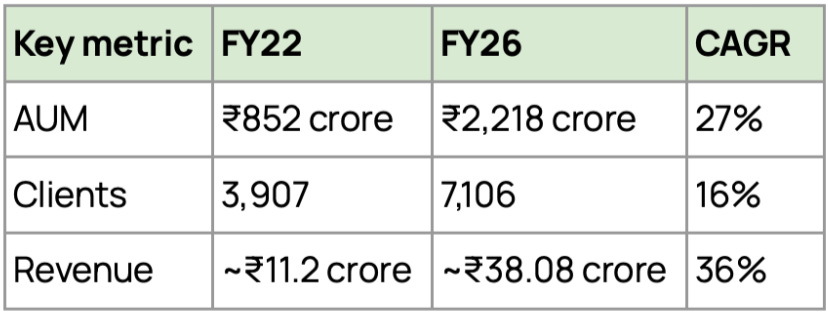
The opportunity is large because the mass-affluent market is much broader than the company’s core HNI segment.
Even so, it remains a relatively small part of the company today, contributing only around 3.3% of FY26 operating revenue and 2.4% of AUM. Lower client ticket sizes and revenue sharing with partners may also keep margins below Private Wealth.
For now, it is a promising distribution channel rather than a second major profit engine.
Omni Financial Advisor, or OFA, is a subscription-based technology platform for Mutual Fund Distributors and Independent Financial Advisors.
It provides co-branded mobile applications, portfolio reporting, online mutual fund transactions, financial planning, business dashboards, and client-engagement tools. The distributors continue to own their client relationships, while Anand Rathi earns technology and subscription income.
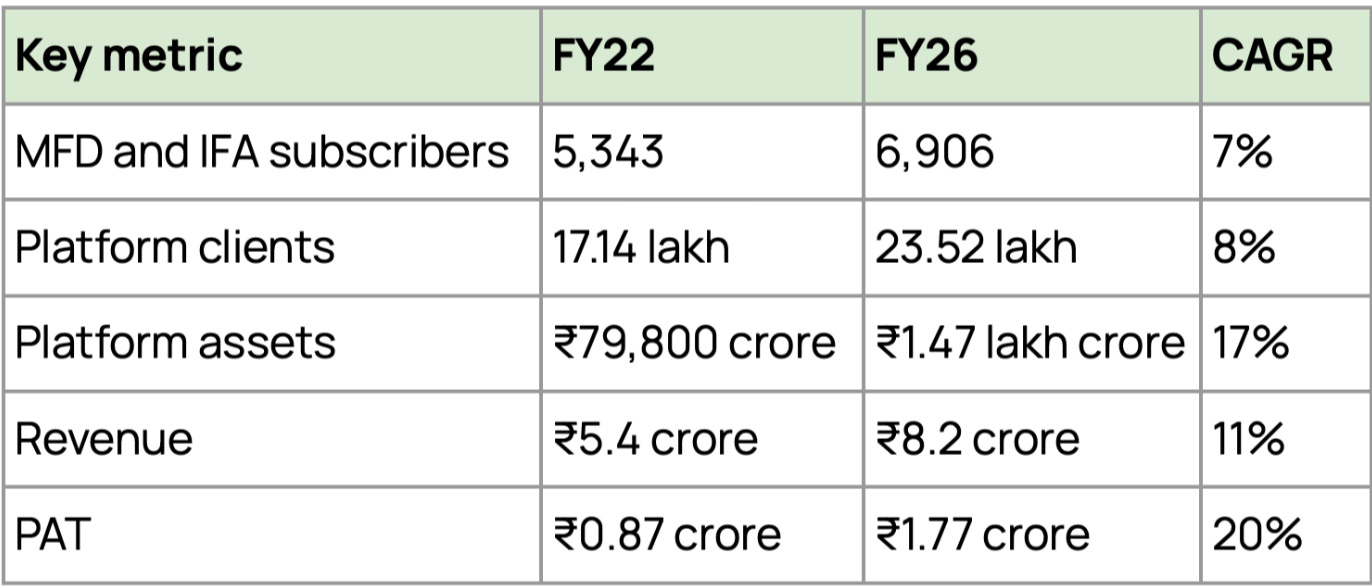
OFA has already built meaningful scale, with platform assets reaching ₹1.66 lakh crore in Q1 FY27.
Subscriber growth, however, has been much slower, with the subscriber base edging down to 6,890 during the quarter. Future value will depend on better pricing, faster subscriber additions and higher revenue per distributor.
3. UK Wealth Business
In February 2025, Anand Rathi Wealth UK was incorporated to cater to the UK market, with a particular focus on Indian-origin and NRI families. It has received authorisation from the UK Financial Conduct Authority as a non-MiFID adviser and arranger.
The business is still in its early days. It did not generate revenue by FY26 and reported a loss of around ₹1.29 crore. Management said operations commenced during Q1 FY27, but it has not yet disclosed client, AUM or revenue numbers.
4. GIFT City and Asset Management
Now, the company is also laying the groundwork for new growth avenues.
Anand Rathi FME (IFSC) was incorporated in February 2026 to operate as a fund-management entity in GIFT City and eventually establish AIFs under IFSCA regulations. It had not commenced operations by the end of FY26.
The board has also approved an application for a domestic asset-management company licence. This is consistent with management’s philosophy of building distribution first and adding manufacturing only after achieving sufficient scale.
If these initiatives scale successfully, Anand Rathi could manufacture its own funds and capture a larger share of the industry’s fee pool. At the same time, managing in-house products also brings new responsibilities around investment performance and potential conflicts if proprietary products begin competing with third-party offerings on the platform.
These businesses should be treated as future optionality rather than part of the current earnings thesis.
Digital Wealth is the most credible of the smaller businesses because it has demonstrated strong AUM, revenue and profit growth. OFA has considerable platform scale but has not yet translated that scale into meaningful revenue. The UK, GIFT City and asset-management businesses remain too early to value independently.
That leaves the overall picture largely unchanged.
Anand Rathi Wealth remains overwhelmingly a Private Wealth company. The smaller businesses widen its addressable market, but none are large enough to materially reduce its dependence on the core HNI distribution franchise.
Now, while these businesses cater to different client segments and follow different operating models, they all have one thing in common:
Relationship managers sit at the centre of Anand Rathi’s Business.
One reason Anand Rathi has been able to scale so efficiently is that each relationship manager is handling far more business than before.
Between FY22 and FY26, the number of RMs increased from 271 to 401, a CAGR of around 10%, while Private Wealth AUM grew at nearly 30%. As a result, AUM managed per RM almost doubled from ₹118 crore to ₹226 crore, while client families per RM increased from 26 to 33. By Q1 FY27, the company had 417 RMs serving 13,941 families.
Higher RM productivity can directly improve profits.
When an existing client invests more money or the portfolio value rises, the company earns more revenue without a similar increase in employee costs. That said, there is a natural limit to this model. Larger families typically expect more personalised service, which means each RM can handle only a certain number of clients.
Another strength has been client retention. AUM lost through client attrition declined from 1.49% in FY22 to 0.54% in FY26, and fell further to just 0.09% in Q1 FY27, when the company also reported zero RM attrition.
Low client attrition helps Anand Rathi retain mutual-fund trail income, improves the chances of structured-product rollovers and allows AUM to grow over time without constantly replacing lost clients. In our view, higher RM productivity and strong client retention are key reasons why profits have grown faster than the employee base.
On a consolidated basis…
Revenue increased from ₹425 crore in FY22 to ₹1,198 crore in FY26, a CAGR of around 30%.
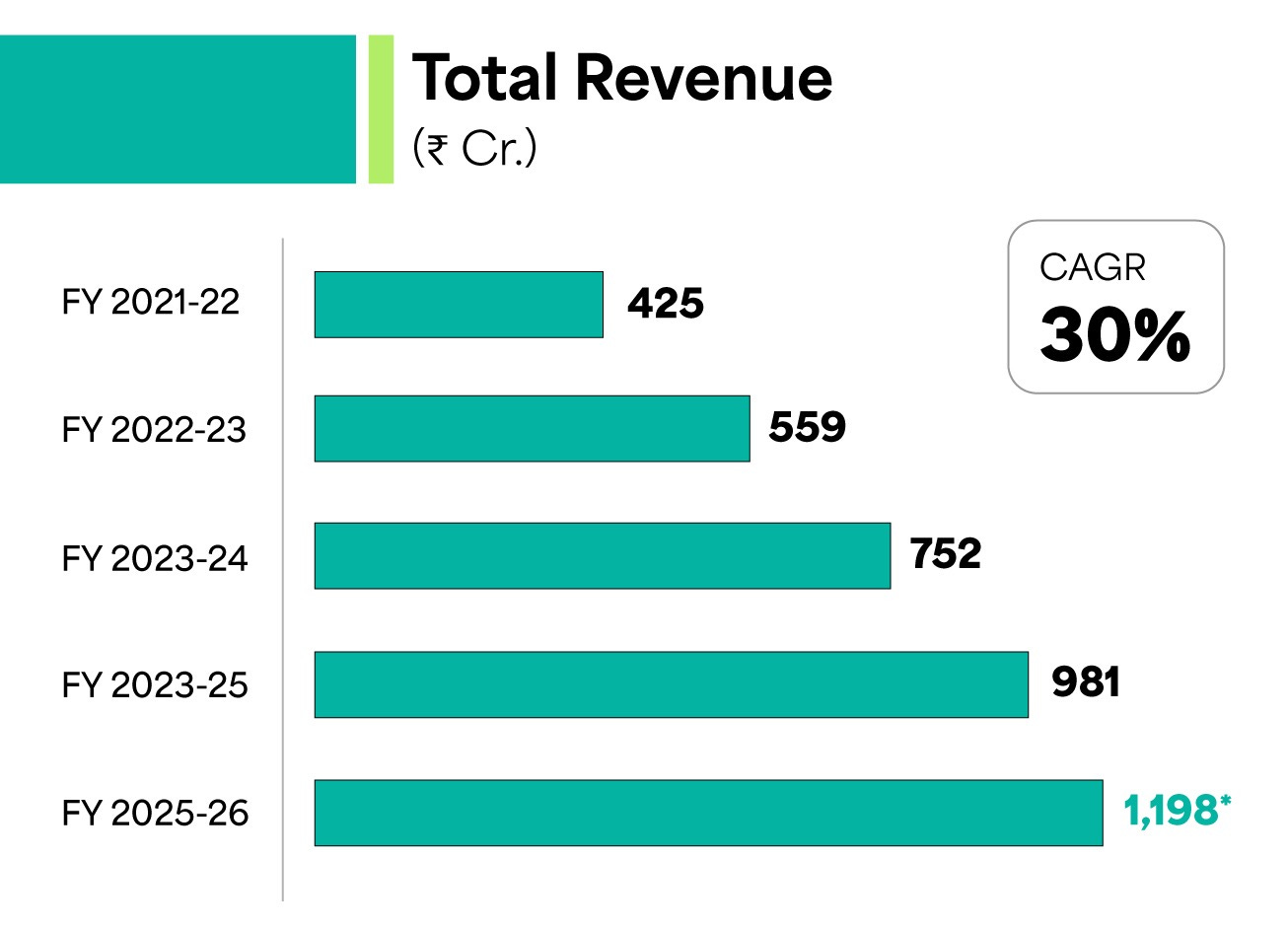
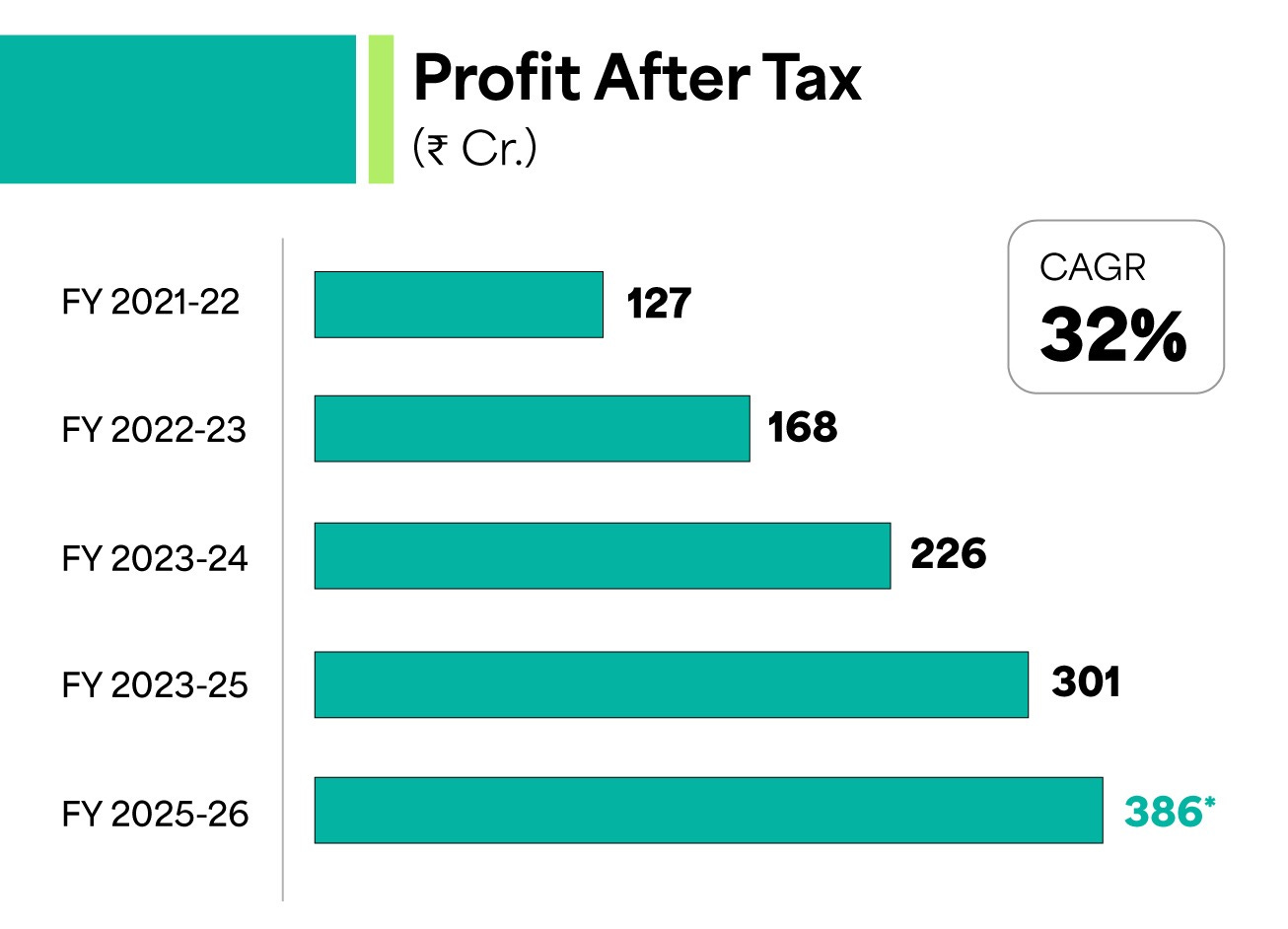
PAT grew faster, from ₹127 crore to ₹386 crore, a CAGR of around 32%. PAT margin expanded from 29.8% in FY22 to 32.2% in FY26, supported by higher RM productivity, rising AUM and operating leverage.
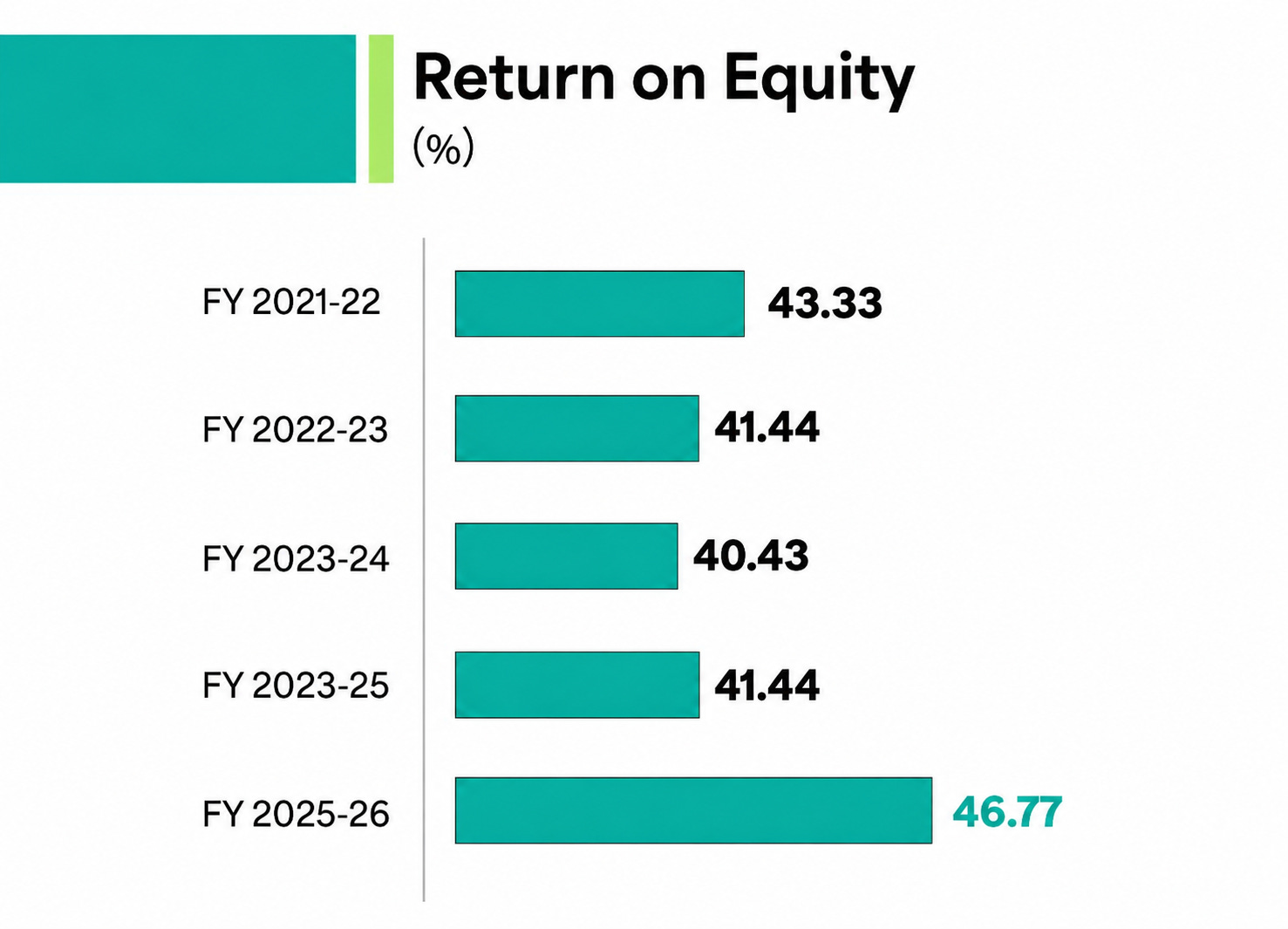
ROE stood at 46.7% in FY26, meaning the company earned nearly ₹47 for every ₹100 of shareholder capital. This is possible because wealth distribution requires limited capital and physical assets.
The company also followed a steady dividend policy, with dividend per share increasing from ₹6 in FY23 to ₹13 in FY26. Despite this rise, the payout ratio remained broadly stable at around 26-30%, averaging nearly 28% over the four years.
This has been possible because the balance sheet remains exceptionally strong. With a debt-to-equity ratio of just 0.02x, the company has ample flexibility to invest in new businesses, expand internationally and continue rewarding shareholders through dividends, all without placing meaningful pressure on its finances.
(FY26 revenue and PAT are shown after excluding the fair-value gain, ESOP expense and related tax impact to reflect the underlying business performance more clearly.)
This brings us to Anand Rathi’s growth opportunities.
Expanding the HNI and ultra-HNI franchise:
New client additions remain an important growth driver. The company added approximately 1,600 net new client families in FY26.
A particularly attractive opportunity lies in the Platinum segment, which includes families with more than ₹50 crore of investable assets. Anand Rathi currently serves around 211 Platinum families and aims to increase this number to approximately 450-500 families over the next few years.
It’s a rather straightforward opportunity. A single Platinum family can contribute significantly more AUM than a typical HNI client. As a result, the company doesn’t need to add thousands of such clients to move the needle; even a few hundred additional Platinum relationships could meaningfully boost both AUM and revenue.
Increasing its share of mutual fund inflows:
The company’s share of India’s active equity mutual fund net inflows increased from approximately 0.18% in FY20 to around 2.38% in 9M FY26. Management’s longer-term ambition is to capture around 4% of active equity mutual fund net inflows.
This target also puts Anand Rathi’s growth opportunity into perspective. The company doesn’t need to dominate the wealth management industry to keep growing at a healthy pace. Steadily gaining a larger share of mutual fund flows, adding new clients and benefiting from market appreciation could together support strong AUM growth for years to come.
International and NRI opportunity:
The company is also building capabilities to serve non-resident Indians and wealthy families with assets spread across different countries.
It has established a presence in the UK, started developing its GIFT City business and is working towards obtaining a representative licence in Bahrain. These initiatives could help Anand Rathi serve NRI clients investing in India and provide services to existing Indian clients with international financial requirements.
Product manufacturing through an AMC licence:
The board has approved an application for a domestic asset-management company licence. If approved, this would allow Anand Rathi to move beyond distributing third-party products and begin manufacturing its own investment products.
Management continues to guide for 20-25% annual growth in net profit over the long term. For FY27, it has targeted revenue of ₹1,415 crore, PAT of ₹460 crore and AUM of ₹1.20 lakh crore.
The company also aims to maintain a PAT margin of at least 30% and a PBT margin above 40%, clearly suggesting that the management is not pursuing growth at the cost of profitability.
What about the management’s ability to execute?
Below is the comparison of management’s FY26 guidance versus the actual FY26 performance:
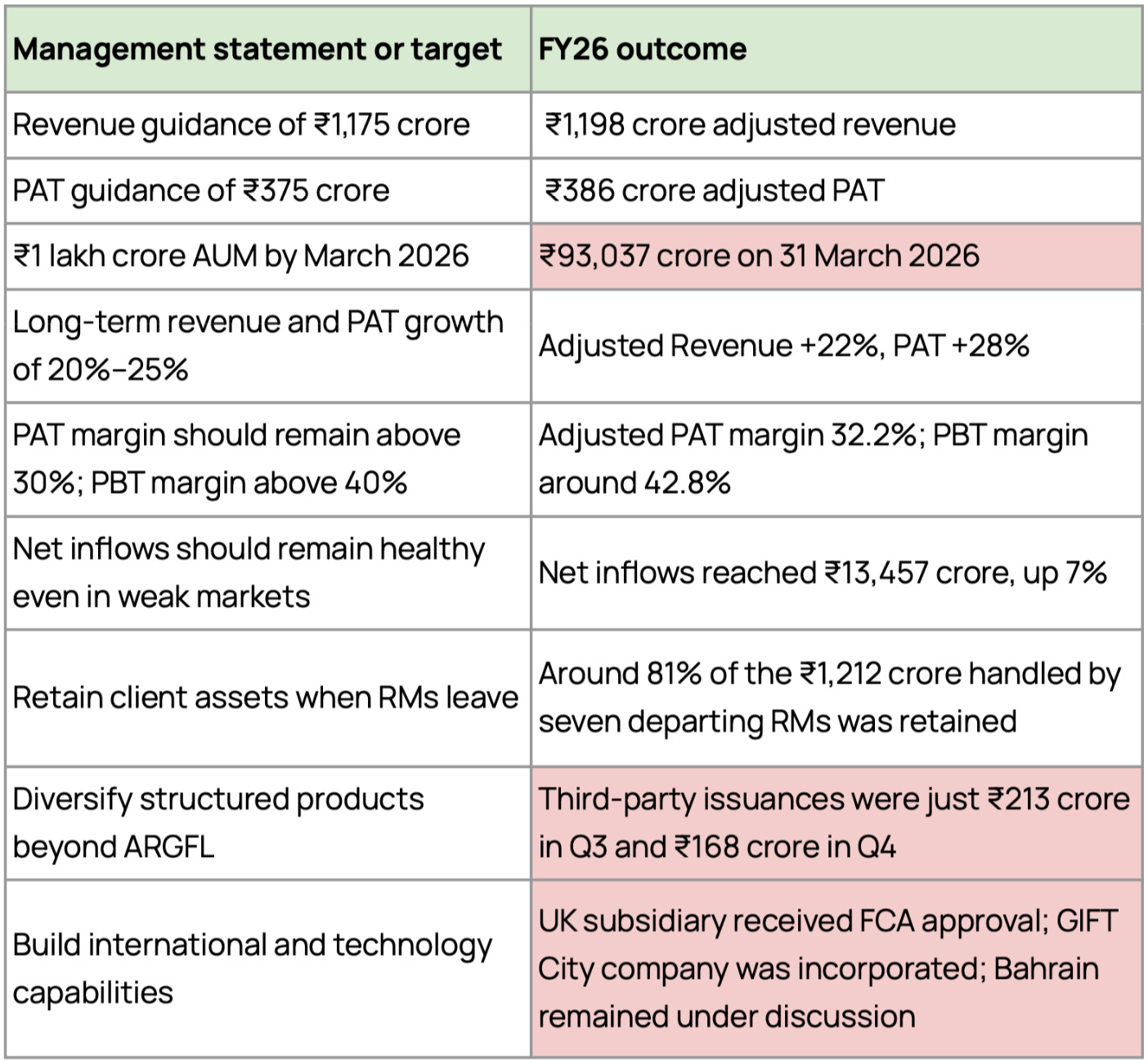
Overall, management executed well on the metrics that were largely within its control. Revenue, PAT, margins, client additions and net inflows all remained healthy, and the company exceeded its profit guidance for yet another year. It also maintained profit growth of more than 20% in every quarter despite volatile market conditions.
That said, not every management claim was fully delivered.
The ₹1 lakh crore year-end AUM target was missed
MF trail mix remained below the 50% aspiration in the long run
Third-party structured-product distribution also remained too small to meaningfully reduce dependence on ARGFL.
The company is not truly market-agnostic because AUM, product mix and parts of revenue still move with equity markets.
A well-run business doesn’t automatically deserve a place in a long-term portfolio. That decision requires looking beyond execution to business quality, valuation, capital allocation and risk.
The same principle applies when we research companies for Finology 30.
In fact, we’re updating three stocks this month, and interestingly, all three happen to be market leaders in their respective categories.
Back to today’s discussion…
What could go wrong for Anand Rathi?
Some facets that make Anand Rathi attractive also create important trade-offs:
More than half of revenue depends on fresh product issuance:
Revenue from other financial products, largely structured-product distribution, was ₹648 crore in FY26, equal to around 52% of reported revenue, despite structured products forming only 28.5% of AUM. This happens because the commission is generally recognised when the product is issued, rather than spread evenly across its full tenure.
This makes reported revenue more sensitive to new issuances than the AUM number suggests. In Q3 FY26, primary issuances declined from ₹1,979 crore to ₹1,815 crore and revenue from other products fell around 9% sequentially. Therefore, even if outstanding structured-product AUM remains stable, revenue can slow when clients delay investments or do not reinvest at maturity.
RM productivity cannot keep rising without limit:
Anand Rathi’s growth has partly come from asking each RM to manage a larger book. AUM per RM increased from ₹198 crore in FY25 to ₹226 crore in FY26, while clients per RM increased from 31 to 33. This has supported margins because revenue has grown faster than headcount.
The company ended FY26 with 401 RMs, an increase of just 21 over the previous year, even though management highlighted 45 gross additions during the year. Looking ahead, sustaining 20-25% growth will require a steady pipeline of trained relationship managers.
Since it takes time for new RMs to build client relationships and mature their books, expanding the RM network isn’t something the company can accelerate overnight.
A small commission cut can have a larger impact on profit:
Mutual-fund distribution generated ₹494 crore of FY26 revenue, with management estimating the commission yield at around 1.09% after GST. Large AMCs are already negotiating distributor payouts, although management currently expects only limited pressure of around 0.01%-0.03%.
The effect should be measured against the yield, not against total AUM. A 0.03% cut from a 1.09% yield represents roughly a 2.8% reduction in MF revenue, equivalent to around ₹14 crore on the FY26 revenue base.
The risk would be structural if regulation repeatedly lowers regular-plan commissions, increases the attractiveness of direct plans or forces a wider shift towards fee-only advisory. The company may continue gaining AUM market share, but earnings growth could still slow if revenue earned on each rupee of AUM declines.
The risk that sits outside Anand Rathi Wealth’s own balance sheet:
Anand Rathi Wealth itself carries very little debt, but its structured-product business depends heavily on the group NBFC, Anand Rathi Global Finance Limited. Structured products formed ₹26,472 crore, or 28.5% of FY26 AUM.
In Q1 FY27, group entities issued ₹1,875 crore of the ₹2,187 crore primary structured products distributed by ARWL, implying an 86% group-issuer share. ARWL also purchased ₹5,577 crore of debentures and securities from ARGFL in FY26 and owns a ~7.9% stake, valued at ₹217 crore in its books.
This also creates a three-way risk. If ARGFL faces a credit, liquidity or hedging issue:
Clients could lose money on structured products.
ARWL’s structured-product revenue could decline.
The value of ARWL’s stake in ARGFL could fall.
ARGFL’s gross NPA ratio was still low at 0.62% in 9M FY26, but its AUM rose to ₹9,589 crore, on-book gearing increased to 11.54x, and capital adequacy fell from 18.3% in FY25 to 15.52%. CRISIL also noted that market-linked debentures form most of its borrowings, while around 42% of assets were invested in government securities used for derivative strategies. This makes ARGFL’s liquidity, hedging and access to market funding important risks for ARWL.
Promoter selling
Promoter selling is another risk to monitor. Anand Rathi Financial Services sold a 1.74% stake worth around ₹500 crore during Q1 FY27, reducing total promoter holding to 41.37%. At the current valuation of around, further promoter monetisation could weaken sentiment and increase downside risk if growth disappoints.
Coming to Valuations…
At 72x earnings, Anand Rathi Wealth is trading around 31% above its historical median valuation of 55x.
Assuming a five-year holding period and a 15% annual return expectation, the outcome depends heavily on the valuation multiple the market assigns after five years.
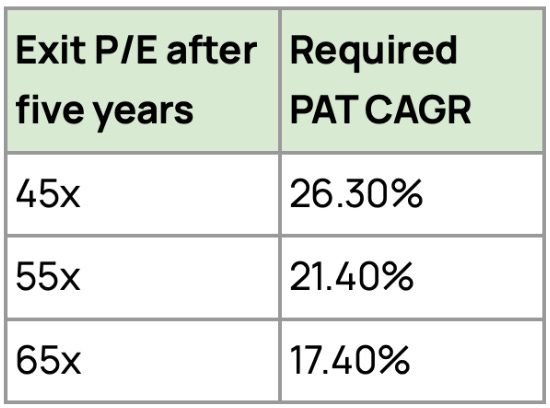
If Anand Rathi Wealth returns to its historical median P/E of 55x, PAT must grow at around 21.4% annually for five years for investors to earn a 15% return, excluding dividends. That’s achievable, but it sets a high bar.
Adjusted PAT grew at a 32% CAGR between FY22 and FY26. However, earlier growth benefited from a low base, higher RM productivity and PAT-margin expansion from 29.8% to 32.2%.
Sustaining 21%+ growth would require strong AUM and net inflows, client attrition below 1%, rising RM productivity and continued growth in mutual-fund trails and structured products. With margins already high, future profit growth will increasingly depend on business growth rather than further cost leverage.
The valuation leaves little room for disappointment. At 55x earnings, 18% PAT growth would generate an annual return of around 11.8%, while 20% growth would deliver around 13.7%. PAT needs to grow at roughly 22% for returns to cross 15%.
Anand Rathi deserves a premium for its high ROE, clean balance sheet, strong retention and consistent execution. But at 72x earnings, investors are already paying for several years of near-flawless growth. The stock looks attractive only if PAT can compound above 20% for a long period while the premium valuation remains intact.
In our view..
Anand Rathi Wealth offers a focused way to participate in India’s growing HNI wealth-management opportunity. Its business is built around long-term client relationships, mutual-fund distribution and structured products, supported by high RM productivity, client attrition of less than 1% and a capital-light business model.
Finology’s Exclusive Updates
From Ticker: The Branded Jewellery Shift
Indian consumers are increasingly choosing organised jewellery brands over local goldsmiths, driven by trust, transparency, and better designs.
Use Ticker to identify the companies benefiting from this shift:
Studded Jewellery Mix: Check Documents for a rising share of diamond and studded sales, which carry far higher profit margins than plain gold.
Inventory Turnover: Check the Ratios tab for dropping inventory days - fast turns mean cash isn’t getting trapped in display cases.
SSSG & Store Expansion: Look for strong Same Store Sales Growth (SSSG) in quarterly reports, proving revenue is driven by real footfalls.
Gold buying is eternal, but where Indians buy is changing fast.
Use Ticker to target organised jewellers winning the trust shift before the market fully prices in their expansion.
That’s a Wrap for Today!
We’re always looking for interesting businesses and industries to explore.
If you enjoyed this DeepScan, we’d love to hear from you. And if there’s a company, industry, or business model you’d like us to break down next, simply reply to this email or drop a comment.
See you in the next edition!
Pranjal Kamra
Research: Jayesh Mohta
Editorial: Mehvish Qureshi
Disclaimer
The information and analysis provided herein are for educational and informational purposes only and do not constitute investment advice, a research recommendation, or an offer, solicitation, or recommendation to buy, sell, or hold any security. Investors should exercise their own judgment, conduct independent due diligence, and consult professional advisers before making investment decisions. Finology Ventures Private Limited, its affiliates, directors, employees, and research analysts shall not be liable for any loss or damage arising from the use of or reliance on this information.
SEBI Registered Research Analyst Details:
Registered Name : Finology Ventures Private Limited (RA Division)
Registration No : INH000024277
BSE Enlistment No. : 6877
Validity : Dec 16, 2025 - Dec 15, 2030