
The Glue That Stuck to Every Indian Heart
The rags-to-riches story of the Gujarati man who turned carpenter's glue into a cultural phenomenon.

“Pehle Law ki padhai Ki...Uske baad Bharat Chhodo Andolan kiya...Uske baad Law khatam karke wood trading aur import business karne laga. Agar import business karna tha toh law kyu kiya?”
This makeshift version of the line from “3 Idiots” pretty much sums up the life of Balvant Parekh, before he founded Pidilite. The same Pidilite that is famed for creating the Fevicol range of adhesives.
But Balvant’s life wasn’t as easy as just switching jobs on his whim, and neither were Pidilite or Fevicol the great companies and products that they are today. Let’s find out how the brand and the person reached their current fame.
The Balwant Parekh Origin Story
Balvantray Kalyanji Parekh was born in a Jain household in the Bhavnagar district in Gujarat. To reiterate and expand on today’s story’s opening, he enrolled in the Government Law College Mumbai to follow in his grandfather’s footsteps of becoming a magistrate.
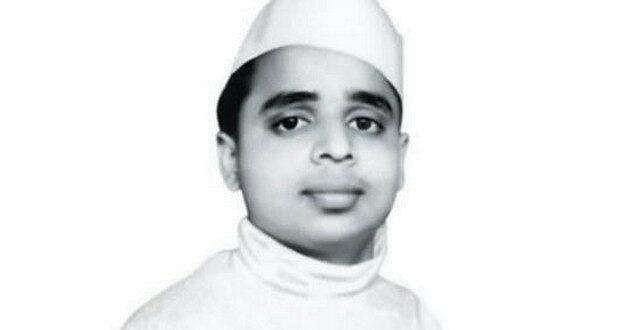
This was during the peak of the Indian Independence movement, and like many youngsters of the country, Balvant too was inspired by Baapu. He dropped out of law school to join the Quit India Movement to follow his inspiration, much to his parents’ disagreement.
After a brief stint in social movements, Balvant resumed his education in law and even finished it. However, he didn’t become a member of the bar council as the need to tell lies associated with the profession of being a lawyer didn’t sit well with his conscience.
And thus began Balvant’s pursuit of a career that he liked. Although he studied law, he was a businessman at heart. But he couldn’t just willy-nilly set up shop, call it a business, and hope to run it successfully. He had to bide his time and collect valuable experience and capital.
During the time that it took to collect both of these, Balvant didn’t shy away from any task that came his way. He worked in a dyeing and printing company, after which he even spent some time as a peon in a wood trader’s office.
During this time, Balvant moved into a warehouse owned by a friend with his wife, as other living arrangements were not affordable for him.
Balvant truly believed that no task was too petty for a man on a mission. And on a mission, Balvant was. So when he met Mohanbhai, a dye trader he had built a rapport with, he offered him the opportunity to invest in his business, importing dyes and chemicals from Western countries like Germany, Italy, and England.
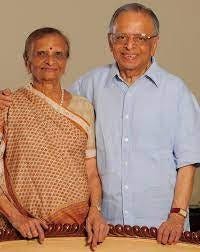
But this association with Mohanbhai didn’t last too long. When Balvant wanted a bigger share in profits, his partnership with Mohanbhai ended.
Around 1954, several things fell into place at once. Balvant joined Fedco, a firm representing the German company Hoechst in India, as a partner for fifty per cent profits. Impressed by Balvant’s business knowledge, Hoechst’s MD invited him to train at one of their German factories.
Balvant returned with both knowledge and ambition, but shortly after, the MD passed away. With Hoechst now wanting to operate independently from Fedco, Balvant bid farewell and wasted no time, joining hands with his brother Sushil to start Parekh Dyechem Industries, with Mohanbhai coming on board not as a departing partner, but as an investor in this new venture. Under Parakh Dyechem, Balvant kept buying stakes in Fedco.
This Parekh Dyechem Industries changed to Parekh Dyechem Lite Industries, then to P.D. Lite Industries, and then to Pidilite Industries.
“Parekh Dyechem Industries changed to PDI Chemicals Pvt. Ltd., then to PDI Chemicals Ltd., and then to Pidilite Industries Ltd.”
Chaunk gaye na? Me too.🤭
The Vegetarian Glue
During his time working at the wood trader’s office, Balvant noticed one thing: the adhesive traditionally used in woodworking was made very cumbersome to use and wasn’t very strong.
As a result, carpenters had a hard time handling the adhesive, and their work wouldn’t last long, irrespective of their skill.
Another thing that the Indian populace couldn’t agree with was that traditional adhesives were made with animal parts. I will spare the details of the animal glue for those with a weak stomach. But in the largely vegetarian demographic of India, Balvant saw a business opportunity.
Balvant created Fevicol right at the very birth of Pidilite, launching it around 1959-1960, almost simultaneously with the company's founding, leveraging his Fedco connections. It was a glue made with synthetic resin instead of animal parts, designed to be far more acceptable to the Indian masses.
Not only that, Fevicol was initially catered to the carpenters because woodworking adhesive was a very user-driven purchase. This meant that the consumer of the furniture didn’t care much about the adhesive used and delegated that decision to the carpenter who would construct the furniture.
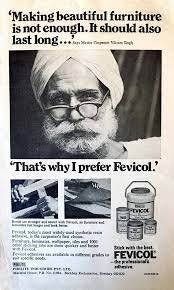
The name “Fevicol” was a mix of parts of “Fedco” and the German word “Col”, which meant anything that bonds two things. It had also drawn inspiration from the German adhesive prevalent at that time called “Movicol”.
This name was very beneficial for Pidilite as adhesive had existed for a long time as a product, but “Fevicol” gave Pidilite’s adhesive an edge through brand recall. Customers now had a recognizable adhesive that they could pinpoint as their choice.
But it wasn’t all sunshine and daisies for Balvant and Pidilite. With the “vegetarian glue” clearly being a good idea, the company now faced a new problem, competition from other companies copying Pidilite and Fevicol.
Getting Crafty
While the carpenters were already sold on Fevicol being the best adhesive, Pidilite couldn’t risk losing its recognition among the retail customers. To consolidate their position in the market, Pidilite changed the target of their approach. They went from an industrial product meant only for furniture to a retail consumer product.
While it takes significant marketing maneuvering to successfully make a shift like this (ex. Asian Paints’ ad campaign), Balvant chose to work smart and not too hard. Balvant made Fevicol a product that would appeal to the “Arts & Craft” crowd to approach the retail consumers. This was achieved by switching the packaging of Fevicol and selling it in 30 gm tubes.
This foray into arts and crafts was bolstered by introducing Fevicryl, Fevistic, Rangeela, and other products that were more suitable for students than carpenters.
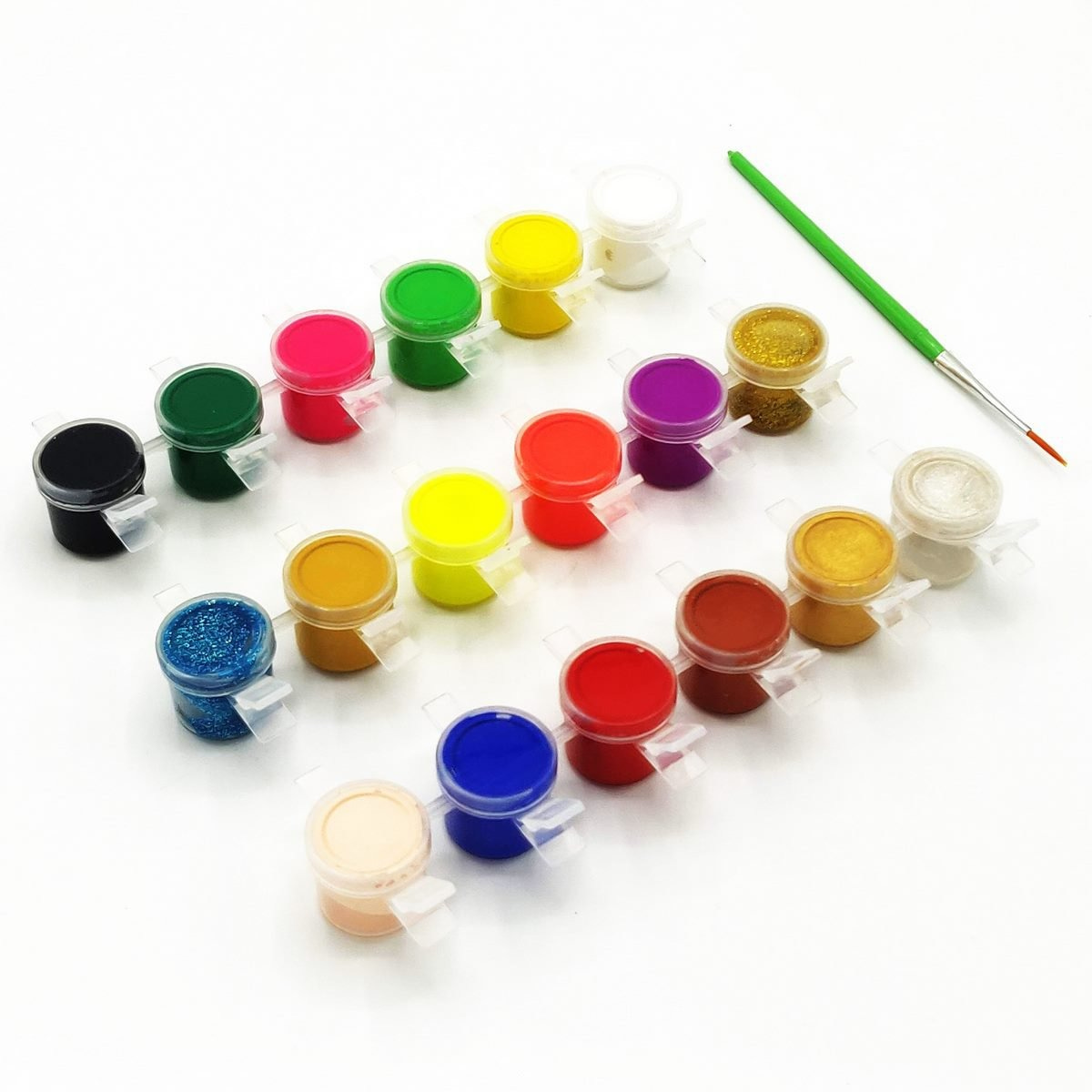
With the consumers hooked on Pidilite’s products as well, the “Fevi Family” became a product capable of satisfying all of your sticking needs.
Fevicol: A Popstar
It’s one thing to become har ghar ka brand, but Fevicol rose above and beyond and became a sort of a cultural reference in the entire country. But this couldn’t be achieved easily. Adhesive wasn’t exactly the most glamorous or frequently used product, and customers needed a reason to remember the brand.
Pidilite achieved this through a witty ad campaign and left a lasting impression on the masses. These ads gave us the famous “Fevicol ka mazboot jod hai, Tootega nahi” and “Asli Waterproof Adhesive”.
These campaigns made the Fevicol brand name identical to “strong bonds”.
Fevicol also gained even more populace as it was mentioned in various contexts as the famous song “Fevicol Se” in Dabbang 2. During his visit to Japan, Narendra Modi commented on the strength of the relationship with the country by saying, “Yeh fevicol se bhi zyada mazboot jod hai!”
Honestly, what more could a company ask for?
The Bottom Line
Although Balvant grew out and away from his point of origin in good old Bhavnagar, he was not ungrateful or forgetful of his roots. With the success of Pidilite fueling him, Balvant helped in the set-up of Arts & Science College in Bhavnagar and donated close to ₹2 crores for Bhavnagar’s Science City and Gujarati Sahitya Parishad.
And this was the story of how a college dropout who didn’t pursue the profession his education afforded him went on to create one of the biggest brands in India.
Because of sheer determination and concentrated will, Balvant secured a “Fevicol strong” bond with success.